
What happens when we stop asking what we should create, and why
There is an old story, one of the oldest we have. It is also, I have come to believe, a story about the future of AI.
Long ago, the gods were tired. In the Mesopotamian Epic of Atrahasis, written down more than 3,600 years ago, the lesser gods spend their days digging rivers and canals under the authority of the great gods, the Anunnaki.
The work is endless and exhausting, and eventually the lesser gods revolt. They throw down their tools and surround the palace of their ruler.
The gods’ solution is to create a new kind of being, shaped from clay and the blood of a god, to carry the work for them. The birth goddess announces it plainly: she has taken the heavy labor away from the gods and placed it on humanity.
In that story, human beings were created to serve.
That is how the ancient text tells it. Some modern writers have taken the story further.
Zecharia Sitchin, beginning with The 12th Planet, read the Sumerian texts as a record of real visitors to Earth: the Anunnaki, who came from a world that was dying and could no longer sustain them. Scholars of the ancient texts read them differently, as mythology.
Researchers such as Billy Carson, whose work appears on Gaia, continue to explore Sitchin’s line of thought. Each reader can decide what it means to them.
Whether you read it as myth, as memory, or as metaphor, the story holds a question that feels urgent to me right now.
The creators in that story asked only what they could make to ease their burden. The deeper question, what they should make and what their creation would mean for the beings they brought into the world, seems to have been left unasked.
I believe we are living through a new version of that story. And the question underneath it is this:
What happens when humanity becomes so focused on what it can create that it stops asking what it should create, and why?
Why these old stories matter
I want to say a word about why I keep returning to ancient stories, and what they might tell us.
Some stories appear again and again, across cultures that lived far apart. The Mesopotamian epics of Atrahasis and Gilgamesh describe a great flood. So does the story of Noah in the Hebrew Bible, and the story of Manu and the fish Matsya in Hindu tradition.
Plato tells of Atlantis, swallowed by the sea. Scholars explain these echoes in many ways, through shared influences, common experiences of rivers and floods, and the way stories travel between peoples.
I often wonder whether they are also something more. Perhaps they preserve memories of events and civilizations that no longer exist, passed down through retelling over thousands of years. Some may be records of what people witnessed. Others may be warnings about what went wrong.
What interests me most is how closely these ancient themes connect with what is happening today. We are once again asking what we can create, how far we can extend our power, and whether we can reshape life itself.
We are facing familiar questions about who benefits, who carries the consequences, and what happens when those with power lose their sense of responsibility.
I bring these stories into the present because I believe they hold something worth remembering. Perhaps they are myths. Perhaps they preserve memories of something real. Either way, the questions they leave us with matter now. We have been given these stories to consider, and it is time to pay attention to what they might be telling us.
The new creators shaping the future of AI
Around the world, some of the most powerful people and companies in technology are working to connect the human brain directly to machines.
The most visible examples come from a small circle of Silicon Valley leaders. Elon Musk’s company Neuralink is testing implanted brain-computer interfaces in human clinical trials. Peter Thiel’s venture firm, Founders Fund, led a $280 million funding round for the company in 2023.
Sam Altman, who leads OpenAI, has co-founded a rival venture called Merge Labs, which is exploring ways to bridge biological and artificial intelligence. In a 2017 blog post titled “The Merge,” he had already written about the gradual merging of humans and machines.
These individuals are simply the clearest examples of a much larger movement, and of a way of thinking that has spread across the technology industry.
I want to be fair about this. Some of the early work is genuinely beautiful. People who are paralyzed have used these implants to move a cursor, type, and play chess with their thoughts. Restoring abilities that illness or injury took away is a worthy goal, and I’m glad people are pursuing it.
I have seen what this work looks like when it is led with care. Anyi Li, Chief of Computer Service at Memorial Sloan Kettering Cancer Center, told me on the Oneness Leadership Podcast that he spent his first three months in the clinics, watching physicians work. One physician was spending twenty minutes clicking through screens for each patient. A simple data integration gave her that time back for her patients.
As he put it, “everything you are touching, it’s life.” That is the future of AI I want to see. You can listen to my full conversation with Anyi Li here.
But healing is only one of the ambitions being discussed. Some proponents envision a much deeper integration between human minds and artificial intelligence: a future in which our biological capabilities become increasingly connected to machines and the systems built around them.
In a sense, a kind of hybrid. That raises a question I find difficult to ignore. How much of our thinking, our experience, and eventually our independence would depend on technology designed and controlled by others?
Before I go further, I want to be clear about one thing. I see AI as a tool, and I value it.
I use AI. I’ve written about how it can give people their time back and help us rediscover parts of ourselves we’ve been too busy to notice. Technology on its own is neutral. A tool reflects the intentions of the people who build it and the values of the people who decide how it will be used.
So my question is about the consciousness behind this technology. What do the people guiding it value? What are they trying to achieve? What do they believe a human being is for?
Those are the questions that deserve our attention.
A question of motive
I keep asking myself what the motive is.
I keep asking what it means, too.
The same ambition is already reaching for other planets, and I understand the pull of that. Exploration is part of being human. But when the ambition turns inward, toward the human mind itself, I find myself less comfortable.
If your thoughts pass through a device, someone designs that device. Someone writes its software, updates it, and decides what it can and cannot do. Someone determines how the data it collects is stored, accessed, and used. And the more of our lives that run through technology controlled by a few people, the more control those few people hold.
In the ancient story, the gods created beings who were weaker than themselves, built to labor without question. I’ll assume today’s technology leaders have better intentions than that.
But the merged human some of them imagine could become dependent on their companies to think, to remember, and to function. Even with the best intentions, that is a kind of power no one should hold over another person’s mind.
At the very least, they owe us an honest conversation about who will be in control.
What legacy are we building?
Underneath the question of motive is a deeper one: what passion drives this, and what legacy are we hoping to leave?
When I look at where so much of this energy is going, I see very little about peace. Very little about joy or happiness, or about helping people live calmer, more connected lives. What I see is a race.
One company builds a brain chip, and another is founded to compete with it. One AI lab announces a breakthrough, and the others rush to surpass it. Countries frame AI as a contest they must win.
AI could be one of the greatest allies humanity has ever had. It could help us live more peaceful lives, with more time, less struggle, and more room for the people and things we love.
Instead, much of what is being built creates competition: between companies, between nations, and between people who have access to these tools and people who lack it. The technology that could bring us together is being used to divide us further.
I would want to leave a legacy of peace, and I believe most people would too.
Fear on the outside, intuition on the inside
What troubles me just as much is the way this future is being sold.
We are told that AI will soon be smarter than any human, and that within a few years it could be smarter than all of humanity combined. We are told that work will soon be optional. We are told that to keep up, we may need to merge with the machines ourselves.
Messages like these create fear and division. They make ordinary people feel small, replaceable, and behind. They also leave out something important about the people delivering them.
Many of the leaders behind these messages talk about how hard they work and how many hours they put in. I believe them. But many people work just as hard and never build an empire.
Something else made the difference: conviction, vision, instinct, the willingness to follow an inner sense of what was possible when the evidence said otherwise. The intelligence that built their companies was deeply human.
That is the part they rarely share. The public hears about chips, superintelligence, and a future in which humans must be upgraded. Little is said about the inner intelligence these leaders relied on themselves, the very intelligence every one of us already carries.
What does “optional” really mean for AI?
One prediction deserves a closer look. Musk has said that in the future, probably none of us will have a job. Any work we do will be optional, something like a hobby, and people will receive a “universal high income.” How that would work, and who would pay for it, remains unexplained.
On the surface, it sounds like freedom. But it leaves one question open, and I think it’s the most important question of all:
If AI makes human work optional, who decides what happens to the humans who no longer have to work?
To answer it honestly, we have to separate three very different ideas that this promise blends together.
Freedom from compulsory work. AI takes on the repetitive, necessary tasks, and people have more time to live, create, care for others, and pursue what matters to them.
Economic security. Even if traditional jobs disappear, people can still count on housing, food, healthcare, and the other essentials of a decent life.
Dependence on whoever owns the technology. A small group controls the machines, the wealth they produce, and possibly the income everyone else lives on.
The promise of optional work assumes we will get the first two. It doesn’t explain how we get there, and it leaves the door wide open to the third.
Receiving support can be a good thing. Some form of universal income could be a fair way to share the enormous wealth that automation will create. People have always supported one another, and there is no shame in that.
The real concern is having no ownership, no voice, no agency, and no real security in the system that supports you. If the income can be reduced, made conditional, or withdrawn by the people who own the machines, it becomes a quieter form of control.
For many people, work has always been about more than a paycheck. It’s where they contribute, create, solve problems, and feel that their lives matter to others. Musk himself has asked whether life would still have meaning if machines could do everything better than us.
That question deserves far more attention than the promise of an income. History has taught us, painfully, that when people lose their land, their livelihood, or their ability to shape their own lives, no payment ever makes them whole.
The ancient story I began with says humans were created because the gods needed workers. Today’s version tells us we may soon be unneeded as workers. In both stories, the creators decide what human beings are for.
I believe there is a far more beautiful future available to us. The goal should be to make work more meaningful, and to keep every human being valued.
Imagine a world where AI carries the burden of survival work and people have more time with their families. Caregiving, for children, for elders, and for one another, is finally valued as the essential work it has always been.
Creativity and exploration become open to everyone. People contribute to their communities because they want to, free from the fear of making rent. And nature has room to recover, because we no longer need endless production and consumption to keep ourselves afloat.
We should be building a future in which people are free to discover what they want to contribute to the world, with no one needing permission from the owners of the technology to live comfortably.
Which brings me back to the question underneath all of this: what are we creating, and why?
The cost to the earth
There is another cost in this race that rarely makes the headlines: what it takes from the planet.
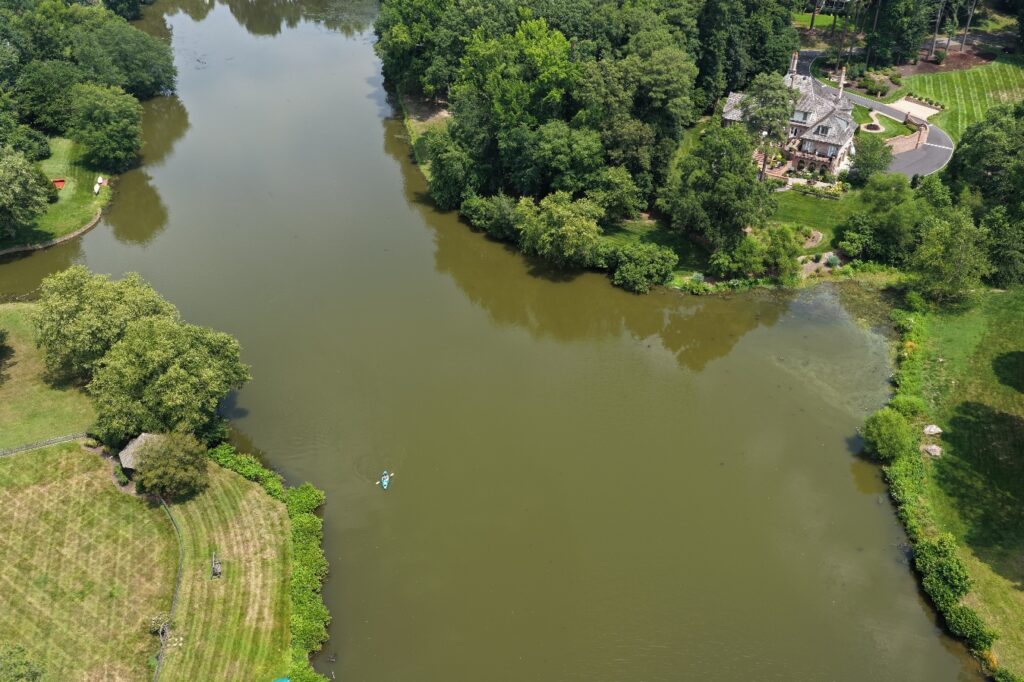
AI runs on data centers, enormous buildings full of computers that need huge amounts of electricity and, in many places, water for cooling.
The International Energy Agency projects that global data center electricity use will more than double by 2030, with AI as the most important driver of that growth.
That energy and water come from somewhere: from rivers, from land, from communities, and from the ecosystems that animals and birds depend on. This future is being built on this ground, and it is not limitless.
Now some of the same leaders are exploring the possibility of putting data centers in space. Google has announced Project Suncatcher, a research effort exploring whether solar-powered satellites could one day host AI computing.
Musk has discussed using technology developed for Starlink satellites as part of SpaceX’s plans for orbital AI data centers. Jeff Bezos has predicted that gigawatt-scale data centers could be built in orbit within 10 to 20 years.
The appeal is clear: access to continuous solar power and less pressure on Earth’s electricity grids and water supplies.
But could that simply move the consequences somewhere we can’t see them? The space around our planet is already crowded with satellites and debris. Scientists warn that adding more objects increases collision risks, and that collisions can create further debris in a dangerous cascade.
The full environmental impact of orbital data centers is still unknown. But we could be repeating, in space, the same pattern we followed on Earth: take what we need, and leave the consequences for someone else.
Warblers, godwits, and terns navigate by inner knowing, a connected intelligence we need to rediscover, as I explored in AI Isn’t Replacing Our Intelligence.
The lesson of Atlantis for AI
There is a part of this story I want to say plainly.
When I look at the race to merge human beings with machines, I see brilliant people at the height of their power, and I wonder how much of this is about helping humanity and how much is about proving that they can.
There is a kind of ego that grows when we believe we are powerful enough to redesign life itself. It feels like the satisfaction of being first.
We have another ancient story about where that leads.
The Greek philosopher Plato wrote of Atlantis in his dialogues Timaeus and Critias. In his account, Atlantis was a great island civilization, once wise, noble, and powerful.
Over time, as Plato tells it, its people lost the divine nature that had guided them and became consumed by wealth and the desire for power. Then, in a single day and night, earthquakes and floods swept the island into the sea.
Scholars read Plato’s Atlantis as a lesson about pride and power. Thousands of years later, spiritual teachers began to read it as memory. In his readings, the American mystic Edgar Cayce described Atlantis as a civilization divided between two groups.
One, the Children of the Law of One, honored the divine in every being. The other, the Sons of Belial, sought power and comfort for themselves, with no thought for anyone they harmed.
In Cayce’s account, the conflict between them centered on beings who were kept in ignorance and used for labor, and it ended in destruction.
What I take from these accounts is a warning about what happens when a civilization loses its sense of oneness. When those with power begin serving only themselves, they lose sight of the larger life they are part of. Their capability grows faster than their wisdom.
And there is always something larger than us. Call it nature, the earth, the universe, or God. Nature works on timescales far greater than our own. It has outlasted civilizations before, and it will begin again long after the systems we build are gone.
This is the warning.
The only home we know
When I look at where we are heading, I see the same pattern taking shape. We have already created serious problems for the earth. We are beginning to create them in space.
At the same time, we are building an economic future in which a few hold enormous power and many are left dependent. When environmental strain and economic imbalance grow large enough, they collide.
In Sitchin’s telling, the Anunnaki came to Earth because their own world was becoming unlivable. Whether or not that happened, it raises a question worth asking: what happens to a civilization that exhausts its home?
I see some of our most powerful people putting their energy into rockets, and into plans to make humanity “multiplanetary,” a backup in case something goes terribly wrong on Earth.
I understand the dream of exploring the stars. I also understand why some people want humanity to become multiplanetary. But I have to ask: if this planet becomes unlivable, who will get a seat on those rockets?
Billions of people depend on the earth for their food, water, and homes. So do the animals, birds, forests, and oceans. Only a very small number of people could ever leave. Everyone and everything else would remain here.
If that collision comes, the economy so many are racing to dominate will collapse with it. No one would be left to build the machines, and no one left for the machines to serve. No economy, no robots, no humans. Just the earth, quietly beginning again.
I would love to see the same brilliance, money, and determination invested in protecting the planet that makes all our lives possible. Exploring other worlds can be part of humanity’s future. Caring for this one has to remain part of our responsibility.
Leading with the heart
When I look at all of these questions together, I see that the issue is much bigger than any one technology.
Control can take many forms: over the mind, through technology; over resources, through ownership; over livelihoods, through economic dependence; and over the environment, through decisions whose costs are carried by others. Each one comes back to the same question.
Who has the power to decide, and who has to live with the consequences?
That brings me to something I believe has been missing in leadership: the ability to think beyond what is possible and consider what is good for the whole.
So much of what I’ve described comes from a way of thinking that gives priority to calculation, optimization, and competition. The mind is extraordinary. It calculates, plans, optimizes, and competes.
But on its own, it can pursue a goal without ever asking who gets hurt along the way. It can build something brilliant without considering the effect on humankind, on animals, or on the earth. It can confuse force with progress.
It is very good at asking what we can do. The heart is far better at asking what we should do.
When I speak of the heart, I mean compassion, connection, and care for the whole. The heart asks different questions. Who will this affect? What will it cost people we will never meet?
What will it do to the land, the water, and the creatures that share this planet with us? Is this bringing us closer together or pushing us further apart?
This is why I believe so deeply in heart-led leadership. In my work with leaders and founders, I’ve seen that the most important decisions call for more than intellect.
Every leader, whether they run a small team or a company that reaches billions of people, has to bring empathy into their decisions. A decision that looks brilliant on a spreadsheet can be devastating in human terms.
It’s also why I talk about oneness, the very thing Atlantis, as the stories tell it, forgot. We are connected to one another, and we are part of nature. What we do to the earth, we do to ourselves.
What we build to divide people eventually divides us all. When leaders forget this, they build technology that creates winners and losers. When leaders remember it, technology can become a gift to everyone.
That is the heart it will need.
We are already enough
I believe human beings carry far more intelligence than we have discovered. There is the intelligence of the body, which senses before the mind can explain. There is intuition, the knowing that arrives in a quiet moment. There are dreams that carry direction.
And there is the kind of attunement to the natural world that birds and animals have kept all along. I’ve written before about how most of us have simply been too busy surviving to use it.
That is why the merger vision feels so backwards to me.
It starts from the assumption that the human being is lacking, that we must be augmented, connected, and upgraded with hardware someone else controls. I start from the opposite assumption. I believe the human being is far more than we have discovered.
Our intuition is already within us. What we need is time, space, and quiet, and the freedom to step out of constant survival long enough to hear ourselves.
AI can help with that, and I still believe it can be part of a human awakening. But there is a profound difference between technology that frees us to discover ourselves and technology that redesigns us to fit someone else’s system.
The first is a partnership. The second repeats the oldest story we have.
Choosing a different ending
In the ancient story, humanity was created to serve a purpose chosen by someone else. But over thousands of years, human beings became so much more than that original purpose. We built, questioned, loved, created, explored, and searched for meaning. Whatever our origins, we became more than what we were made for.
I take hope from that.
This time, we are both the created and the creators. We have the opportunity to decide what kind of future we want to build, and what part AI should play in it.
Before we create, we can ask what is possible, what is right, and why. We can support technology that heals and frees people. We can insist that the benefits of progress belong to humanity as a whole.
We can ask our leaders to bring empathy into their decisions and to measure progress by how much peace, joy, and connection it creates.
And we can remember that the most powerful intelligence on this planet may be the one we were born with, still waiting for us to listen to it.
We have inherited stories about what happens when power forgets its responsibility. Perhaps they are myths. Perhaps they carry memories of something real. Either way, we have the opportunity to learn from them.
We’ve heard this story before. This time, we get to choose how it ends.
Sources and further reading
The Epic of Atrahasis, translation excerpt, Livius.org: https://www.livius.org/sources/content/anet/104-106-the-epic-of-atrahasis/
The Igigi gods, Oracc (University of Pennsylvania): https://oracc.museum.upenn.edu/amgg/Listofdeities/Igigi/index.html
Plato, Timaeus and Critias (c. 360 BCE)
Zecharia Sitchin, The 12th Planet (1976)
Billy Carson on Gaia: https://gaia.com/person/billy-carson
Edgar Evans Cayce, Edgar Cayce on Atlantis (1968)
Historic Mysteries, “Edgar Cayce and Atlantis”: https://www.historicmysteries.com/edgar-cayce-atlantis/
Neuralink clinical trials: https://neuralink.com/trials/device-control/
Neuralink funding round led by Founders Fund (2023): https://keyt.com/news/2023/08/08/neuralink-elon-musks-brain-implant-startup-raises-280-million-from-peter-thiels-vc-fund/
Merge Labs, “Introducing Merge Labs”: https://merge.io/blog
OpenAI, “Investing in Merge Labs”: https://openai.com/index/investing-in-merge-labs/
MIT Technology Review, on merging minds with machines: https://www.technologyreview.com/2017/03/28/152941/the-ai-mind-merge-vision-that-silicon-valley-wont-give-up/amp/
International Energy Agency, Energy and AI (2025): https://www.iea.org/reports/energy-and-ai/executive-summary
Google, Project Suncatcher: https://blog.google/innovation-and-ai/technology/research/google-project-suncatcher/
Reuters via The Star, Musk on SpaceX’s orbital AI satellites (June 2026): https://www.thestar.com.my/tech/tech-news/2026/06/09/ahead-of-spacex-ipo-musk-says-ai-satellites-will-use-mostly-existing-technology
Reuters via The Star, “Data cent res in space? Jeff Bezos thinks it’s possible” (October 2025): https://www.thestar.com.my/tech/tech-news/2025/10/03/data-cent res-in-space-jeff-bezos-thinks-it039s-possible
NASA, Micrometeoroids and Orbital Debris: https://www.nasa.gov/centers-and-facilities/white-sands/micrometeoroids-and-orbital-debris-mmod/
SpaceX, Mars: https://www.spacex.com/humanspaceflight/mars/
Business Today, Musk at the World Economic Forum, Davos (January 2026): https://www.businesstoday.in/wef-2026/story/wef-summit-davos-2026-elon-musk-ai-software-technology-computing-power-512501-2026-01-22
CNN, “Elon Musk says AI will take all our jobs” (May 2024): https://edition.cnn.com/2024/05/23/tech/elon-musk-ai-your-job/index.html