On body intelligence, somatic intelligence, and the quiet work of learning to listen.
There is a moment many leaders know.
You are sitting across from a decision that looks clean. The spreadsheet says yes. The team says yes. Your calendar says yes.
And somewhere below your collarbone, there is a small pull that will not let you go.
That pull is body intelligence: your body registering something before your thinking mind has words for it. You were trained to override it. The mind is where leadership happens, you were told. The body is something you maintain so it can carry you to the next meeting.
I lived inside that belief for two decades. I was good at it.
It cost me more than I understood at the time.
What I was hiding
Here is what I want to say honestly.
I knew some of this intuitively for a long time. I sensed things in my body, in other people, in rooms. I had practices I was drawn to, traditions that spoke to me, a way of reading the world that did not fit inside the professional identity I had built.
So I kept it separate.
I told myself it belonged to another part of my life, not this one. This was work. That was everything else.
Keeping those two worlds apart gave me more misery than I understood at the time. What I was calling professionalism was also a form of hiding. Half of what I knew was not allowed in the room where decisions were being made.
The price was not just comfort. It was identity. To hold the separation, I was editing myself in real time, filtering out the parts that did not fit, performing a smaller version of me so the larger version would stay invisible. Over years, that editing became who I thought I was. I mistook the performance for the person.
The change came when I began to integrate, slowly and then all at once.
I stopped separating my inner knowing from my outer work. I stopped pretending the intuition was not there. And the thing I was most afraid of, that integrating these would cost me my credibility as a leader, turned out to be the opposite of true.
I became more effective than I had ever been. More grounded than the version of me who had been performing. Sharper in decisions, steadier in pressure, clearer in rooms I used to just survive.
The wholeness I had been protecting everyone from was the thing that made me useful to them.
Body Intelligence: The Body as a Thinking Organ
Think of the last time you walked into a room and knew something was wrong before anyone spoke. Or the meeting where a colleague was smiling and your stomach dropped and you were right. That was not guesswork. That was information.

For a long time, the body was treated as a vehicle for the brain. That picture has fallen apart.
The connective tissue that weaves through every muscle and organ, called fascia, is richly supplied with sensory nerve endings. A 2022 systematic review of fascial innervation found free nerve endings in every type of fascia studied, and its authors describe fascia as possibly our largest sensory organ. The tissue under your skin is not only built to move you. It is built to report back.
Your body is not quiet. It has been talking the whole time.
There is a name for the sense through which your brain reads the internal state of your body. It is called interoception. Signals from the heart, lungs, gut and tissues travel to the brain along several routes, including the vagus nerve and pathways through the spinal cord. They are processed across a network of brain regions that includes the brainstem and the insula. This ongoing reading of the body’s internal state is the heart of interoception. More recent work by Jacques Singer and Antonio Damasio goes further. They propose that these slow, steady body signals may be part of the foundation of consciousness itself. This is one way to understand how you can know, before your mind knows, that something is off.
There is a broader way to describe this capacity: body intelligence. What I call somatic intelligence is one expression of body intelligence: the ability to notice, interpret, and work with the information our bodies are constantly communicating. Somatic intelligence gives us a language for developing that capacity, particularly in how we lead, make decisions, and relate to ourselves and others. I explore where this way of knowing comes from in Body Intelligence: Ancient Wisdom for Modern Leadership.
The thinking mind is often the last to know.
Why the Body Holds on to Tension
Every senior leader I work with carries tension somewhere. The jaw. The shoulders. The low back. The diaphragm that never quite unclenches.
We treat it as the price of the work.
It is not.
When the nervous system faces something it cannot fight or flee from, it can freeze. I think of it as charge stored in the tissue. That is a metaphor, not anatomy, but it points at something real: patterns of arousal and muscular guarding that stay switched on long after the danger has passed. Bessel van der Kolk and Peter Levine have spent careers describing how this plays out.
For executives, the original events are rarely what we think of as trauma. They are the client meeting that went sideways years ago. The year you led the layoffs. The early manager who told you never to show weakness. The identity you built to survive your family of origin.
In its own way, the body remembers all of it.
The good news is that the same nervous system that learned the pattern can learn to release it.
What I have learned in my own body
I want to speak personally here, because I do not teach anything I have not walked. I have written more about the years before I learned this in My Body Was Talking to Me. I Did Not Know How to Listen.
Some of what has worked for me has been deeply physical. Some of it has been more subtle. What follows is not a prescription. It is the path I have walked.
Massage surfaces memories. Not always. But often enough that I have learned to trust it. A pattern releases, and a decision I had been circling for months becomes obvious.
Functional range conditioning, which teaches the nervous system to control new ranges of joint motion, brought me to an advanced stage of healing. What I came to understand is that my sacral chakra and heart chakra had been blocked, and that was why my kundalini had not been flowing freely. Reiki had begun the transformation. Sound baths had played their part too. But in my experience, it was the deep physical work of functional range conditioning that actually released those two centers. Once they opened, everything else moved differently.
Think of it like an engine that has been running on old oil for years. It still moves. You still get where you are going. But it is sluggish, noisy, sometimes it catches. You have learned to call that normal.
Then one day you do the maintenance the engine has been waiting for, and suddenly the whole machine remembers what it was built for. You are no longer a car that runs. You are a car that performs. And if the work continues, you stop being a car at all. You become something closer to a rocket.
This is what the nervous system does when it releases. Every stored pattern, every piece of unmet experience, every trauma your body has been guarding is energy that was unavailable for your life. As the body lets go, that energy comes back online. You are not becoming a different person. You are becoming the version of yourself that was always there underneath the protection.
Acupuncture has been another teacher. On more than one occasion, I have dreamed of a specific place in my body where I sensed something was blocked. Once, I showed my acupuncturist the area, a ring around my belly where the blockage had appeared in the dream. I did not know I was pointing at a meridian. She looked at where my hand was and said yes, that is exactly the meridian. She helped me release it. It was the belt meridian, the only channel that circles the body horizontally. In Chinese medicine it is called the Dai Mai. I did not know any of that when the dream came. My body did.
Reiki has taught me something different. When I give Reiki to someone, I sense things. Once, working with a young boy who had injured his elbow, I sensed something held in his throat. I named it gently, and only that. Within a week, he found the words for something he had been carrying.
I am not claiming a mechanism for that. I am telling you what I sensed and what followed. I have come to experience it as an extension of the attention I have cultivated in my own body.
There are other practices I have come to trust.
Tapping, where you gently percuss acupuncture points on your face and body while holding a difficult feeling in awareness. Or simply holding pressure on the same points, which is closer to trigger point release. It can feel exotic the first time, almost magical when it works. For me, it works. The research is still growing; a 2023 meta-analysis of tapping for PTSD found results comparable to other established therapies.
Breathwork. What works best for me is breathe in for four, hold for four, breathe out for seven. A long exhale with a held pause in the middle. One of the most powerful tools I own, and the most portable. I use it before every difficult conversation.
Listening to the body. Not with words, because the body does not speak in words. It speaks in sensation. A burning energy coming up from your knees. A tightness along the Achilles tendon that releases the moment you touch it. A damp heaviness behind the eyes. A ring of pressure around the ribs. You do not need to translate any of this. You just stay with what is there. That is already the practice. The philosopher and psychologist Eugene Gendlin called this inner texture the felt sense.
And when something releases, it releases more than you expected. It releases in a package. Memories, emotions, old protections, states you have not visited in years, all moving at once, combining in their own way. What leaves is rarely something you could name one at a time. The body has its own grouping.
This does not mean therapy is less useful. Talking heals things that body work alone cannot reach, especially the kinds of stuckness that live around communication. When someone has been silenced, or shut out, or has lost the language for what they carry, speaking is the healing. Body work and talk work are partners, not alternatives. Each reaches places the other cannot.
When something releases in the body, something else moves into the space. The body is a container. When you empty it of what it has been carrying, what arrives is lighter, cleaner, more useful. The lightness itself attracts what you actually need for your next step.
Sound healing, which I have used to release emotions that no other practice could reach. Singing. Humming. Music that moves through you.
Making sounds when no one is around. A groan, a sigh, a moan, a held note, a release that does not need a melody. Sometimes energy will not leave through breath alone. Sound is how it moves.

Mindful movement of any kind. Yoga. Dance. A slow walk with attention. Lying on the floor and letting the body move how it wants.
The Silva Method, which taught me to drop into alpha state, the deep calm brain-wave state, in under three seconds. From there, healing is faster. Intuition is clearer. Questions find their answers. I had been reaching this state naturally for years, in bits and pieces. Silva gave me the method to enter it on demand.
What these practices share is this. Each one gives the nervous system a trustworthy signal that it is safe to let go of something it has been holding.
And each one slowly returns the other half of what you know. The half you were never trained to use.
Somatic Intelligence: Body Intelligence in Leadership
In the framework I am building, somatic intelligence is part of Conscious Intelligence, the first of the Seven Intelligences a conscious leader learns to integrate. It is how body intelligence becomes a leadership skill.
Somatic intelligence is the trained capacity to receive the information your body is already sending, to distinguish a body signal from a cognitive story, and to act from the integration of both. It is the knowing that arrives before the thought. The felt sense of what is true, what is coherent, what is off, and what is not yet ready to be decided.
A leader with developed somatic intelligence notices when their shoulders climb before a difficult conversation and lets them drop before walking in. They feel the difference between fear that is warning them about something real and fear that is an old pattern running on old fuel. They can sit in a board meeting and read the room not only through what is said, but through what their body registers about what is unsaid.
And over time, this capacity extends.
In my experience, a leader who has learned to sense what is held in their own body begins to notice more of what others are carrying. You notice the employee whose words are fine but whose body is holding something they cannot put into language. You notice the colleague who has stopped breathing into their belly somewhere around week three of a project. You know, before they know, that something needs to move.
And you can offer them the space to express it and to release it, whether that is through words, through a shift in the room, through a question that lets them find what they were sitting on, or through the simple permission that it is safe to let it out.
Where to begin
If you are reading this and something in you is already nodding, that is the beginning.
Here is a practice you can begin today.
Three times tomorrow, pause for sixty seconds and ask yourself one question. Where is the sensation in my body right now? Not what are you thinking. Not what are you feeling emotionally. Where, physically, is something asking for your attention. The jaw. The chest. The belly. The low back. The soles of your feet.
You are not trying to change anything. You are only practicing attention. Simply letting your awareness arrive where your body is. If a word arrives on its own, tight, heavy, warm, let it. Research by Matthew Lieberman and colleagues at UCLA found that putting emotional information into words can reduce amygdala activity and engage regulatory regions of the brain. That study was about naming emotions rather than body sensations, so I offer it as a pointer, not proof.
Over time, this simple act rebuilds the channel between your body and your awareness. The signals get clearer. The decisions get cleaner. The protection patterns begin to soften on their own, because they are finally being witnessed.
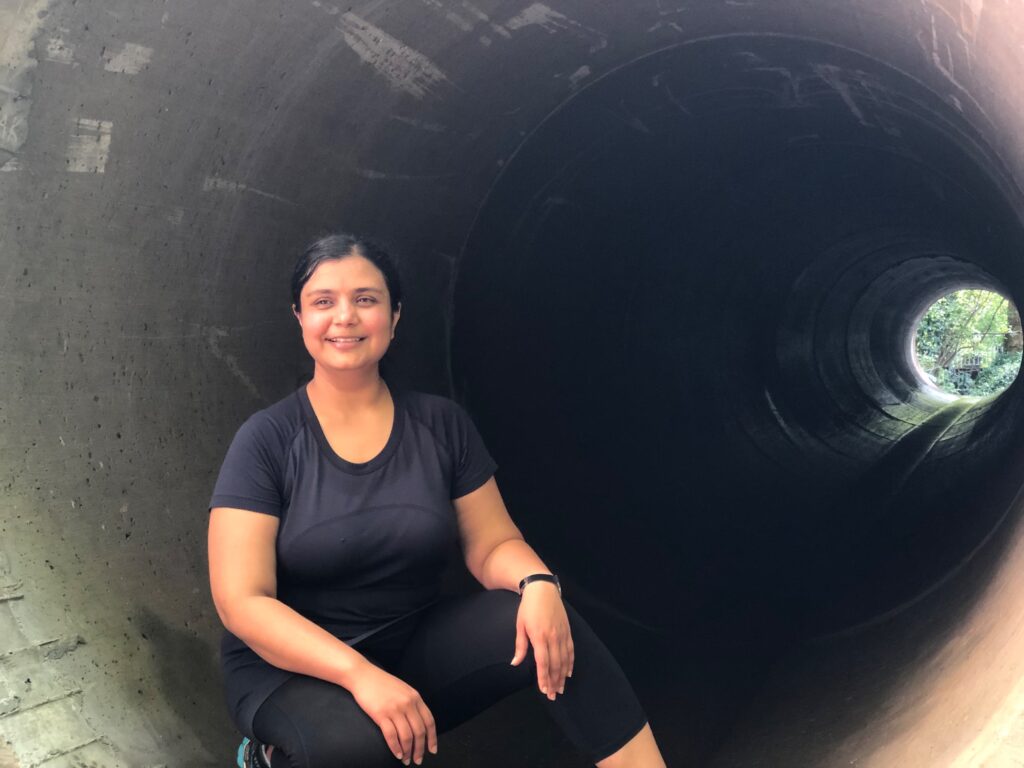
Some leaders do this work alone, and it moves them. Some find that it goes further when there are others in the room doing the same thing.
If the second is you, the Oneness Leadership Circle exists for that. A quiet door, not a crowded one.
However you begin, begin somewhere.
Your body has been waiting.
And the version of yourself that has been waiting inside it is not someone new. It is the one that was always there, underneath the protection, underneath the performing, underneath the years of learning to lead from only half of what you know.
That version is available to you.
You only have to stop hiding from it.
This is part of Conscious Intelligence, the first of the Seven
What I have described in this post is part of one capacity. Somatic intelligence lives inside Conscious Intelligence, the capacity to witness your own state and feel the reaction before it fires. The body is where that witnessing begins.
Conscious Intelligence is the first of seven intelligences I teach. The others are emotional, relational, social, integrative, systemic, and spiritual. Each is a distinct capacity. Together, they form the ground of a leader who is integrated rather than performing. I write about why these human intelligences matter more, not less, in AI Isn’t Replacing Our Intelligence. It May Be Helping Us Wake Up to It.
Work with me
If you are a leader who is ready to stop leading from half of what you know, I would love to talk. If you would like to explore one-on-one coaching, I invite you to book a call, message, or email me or explore my coaching. A conversation is where we begin.
For those who want to go deeper
The ideas in this post draw on decades of research and practice across many fields. Here are some starting points if you want to explore further.
On the body, fascia, and the nervous system
- Bessel van der Kolk, The Body Keeps the Score (2014). The foundational modern text on how trauma lives in the body.
- Peter Levine, Waking the Tiger and In an Unspoken Voice. The origin of Somatic Experiencing.
- Stephen Porges, The Polyvagal Theory (2011). Porges’s theory of the vagus nerve, safety and nervous system regulation. It is influential and still debated among researchers.
- Helene Langevin and colleagues, Evidence of connective tissue involvement in acupuncture (FASEB Journal, 2002), the start of her research on fascia and acupuncture. Langevin directed the NIH National Center for Complementary and Integrative Health from 2018 to 2025.
- Suarez-Rodriguez, Stecco and colleagues, Fascial Innervation: A Systematic Review of the Literature (International Journal of Molecular Sciences, 2022).
- A. D. (Bud) Craig, How do you feel? Interoception: the sense of the physiological condition of the body (Nature Reviews Neuroscience, 2002).
- Jacques Singer and Antonio Damasio, The physiology of interoception and its adaptive role in consciousness (Philosophical Transactions of the Royal Society B, 2025), arguing that body signals are part of the ground of consciousness itself.
On affect labeling and naming sensations
- Matthew Lieberman and colleagues, Putting Feelings Into Words: Affect Labeling Disrupts Amygdala Activity (Psychological Science, 2007). The UCLA study found that putting emotional information into words reduced amygdala activity and engaged regulatory regions of the brain.
- Eugene Gendlin, Focusing. The classic work on working with the felt sense. More from The International Focusing Institute.
On specific practices
- For tapping: Peta Stapleton and colleagues at Bond University, Emotional freedom techniques for treating post traumatic stress disorder: an updated systematic review and meta-analysis (Frontiers in Psychology, 2023).
- For yoga: Zaccari and colleagues, Yoga vs Cognitive Processing Therapy for Military Sexual Trauma–Related PTSD (JAMA Network Open, December 2023), a randomized trial of trauma-sensitive yoga with women veterans.
- For breathwork: Paul Lehrer, My Life in HRV Biofeedback Research (Applied Psychophysiology and Biofeedback, 2022), alongside Stephen Porges’s work on vagal tone.
- For the Silva Method: José Silva, The Silva Mind Control Method. Components of the method overlap with well-researched practices in meditation, guided imagery, and dreamwork.
On the traditions
These are sources on the traditions themselves, not scientific research. They shaped how I understand my own experience.
- For acupuncture and meridians: Ted Kaptchuk, The Web That Has No Weaver.
- For kundalini and yogic practice: Swami Satyananda Saraswati, Kundalini Tantra.
- For Reiki: Pamela Miles, Reiki: A Comprehensive Guide.
About the author
Namita Mankad is an executive leadership coach. She works with senior leaders who are ready to evolve beyond performance-based leadership into a fuller expression of who they are, integrating body intelligence, intuition and strategy.